Showing posts with label Velika Kladuša. Show all posts

Jul 22, 2017

Božanski bik Tur

 Bik je od početka ljudske povijesti sveta životinja koja je zbog svoje fizičke snage i impozantog izgleda dio mnogih mitoloških predaja, legendi i kultova. Među najstarijim mitovima gdje se on navodi locirana je Mesopotamija i predaja o božanstvu Gugalanni, poznatijem kao Nebeski Bik ili Bik sa Neba. Gugalanna je bio prvi muž Ereshkigala, božanstva podzemlja, mračnog svijeta bez svjetlosti. Njega su Bogovi poslali da se osveti Gilgamešu zbog toga što je odbio seksualni poziv boginje Inanne. Tom prilikom Nebeski Bik, čiji udarac nogom izaziva zemljotres, poražen je i ubijen te raskomadan od strane Gilgameša i njegovog pratioca Enkidua.

Na Bliskom istoku religijski pojam ubijanja bika je dosta čest i nalazimo ga i u predaji o genezi uobličene u perzijskom bogu Mitri, od čijeg je opisa rođenja i života nastala mitološka predaja o Isusu, koji lovi i ubija divljeg bika. Iz tijela mrtve životinje nikle su biljke, od kostiju postalo je žito a iz krvi vinova loza. Tada se stvaraju i prvi ljudi.

Bik i nakon pojave islama na ovom području ne gubi svoju božansku osobnost što se najbolje može argumentirati arapskim mitom, ili bolje rečeno kozmologijskom predstavom, o bijelom biku Kujuti koji stoji na glavi strašne zvijeri Bahamut i drži zemaljsku kuglu na svojim leđima.

Bahamut ili Behemoth naziv je za mitološku divovsku ribu koja u arapskoj kozmologiji predstavlja oslonac same planete Zemlje, i za nju mitologija tvrdi da ima mnogo očiju, ušiju, noseva i jezika po sebi. Pojedini mitovi govore kako umjesto riblje ima glavu slona ili nilskog konja, a u nekim verzijama Bahamut je zapravo morski zmaj sa oštrim zubima i udovima. Bahamut na svom snažnom tijelu drži svih sedam sfera koja u arapskoj mitologiji čine cjelokupni univerzum.


Na Bahamatu, odnosno na njegovoj glavi, pozicioniran je bik po imenu Kujuta, koji na svojim leđima nosi planinu od rubina. Na vrhu te neobične planine melek drži sedam slojeva zemlje. Alternativno, po leđima Bahamuta je zapravo površina od pijeska. Kujuta stoji na tom pijesku, a planina koju nosi na leđima ima u sebi ogromni ocean usred kojeg pluta Zemlja. Ispod Bahamuta se nalazi mračni i tajanstveni predio ispunjen maglom i vodom. Neki mitološki podaci tvrde kako ispod te tamne sfere postoji vatreni svijet u kojem obitava zmija po imenu Falak.

Bahamut je originalno mitološko stvorenje arapske mitologije, podaci o njemu se pojavljuju u kosmografskim tomovima koji datiraju iz 1291. Sam naziv na arapskom znači „zvijer“. O njemu je posebno pisao drevni arapski historičar Ibn al-Wardi, a spominje se i u Hiljadu i jednoj noći gdje se navodi priča o čovjeku po imenu Isa koji vidjevši Bahamuta od šoka i straha gubi svijest. Kada se probudi Allah ga pita da li je vidio veliku ribu. Isa odgovara da je vidio kako na glavi ribe stoji bik. Židovi su ovo mitološko stvorenje, poput mnogih drugih religijsko-mitoloških segmenata, asimilirali u svoje mitske predaje.


Arapski Kujuta i bosanski Tur


Pojedini segmenti prezentirane legende imaju dodirnih tačaka sa bosanskim mitom o gigantskom biku Turu, koji na svojim leđima nosi planetu Zemlju, i od čije volje ovisi njena ali i sudbina svih ljudi. Generalno, predaja o Turu je kratka i nema puno detalja koji bi otkrili nešto više o široj predstavi bosanske kozmologije a jedini izuzetak čini Rogatica. Naime, u tom dijelu Bosne se vjerovalo kako ispod zemlje postoji nepregledno more, na njegovoj površini pliva jedna velika riba, na ribi stoji bik a na njemu Zemlja. Kad taj bik pomjeri samo malo jednim uhom, zemlja se zatrese, a kada bi pomaknuo nogom ili čime drugim, sva bi se zemlja u more prevrnula, ali je, vjerovalo se, Allah stvorio jednu mušicu koja stalno oblijeće oko očiju tog bika i on ima od nje toliki strah da se ne smije niti pomjeriti sa mjesta.(1)

Kako kod Turaka nema zabilježene legende niti o Bahamotu niti Turu, može se zaključiti da nije bilo prenošenja mita tokom osmanlijske okupacije BiH već da je on očito rudiment nekog drevnog paganskog kulta koji su baštinili pojedini mediteranski narodi, a među njima i Iliri. Postoji logična mogučnost da su ilirski vojnici službujući u Rimskom carstvu prenijeli legendu o Turu na područje Sirije i dalje, ili obrnuto, usvojili je i donijeli na Balkan. No, kako god bilo riječ je o vrlo staroj legendi iz drevnih, antičkih vremena.

Bik je za Ilire imao vrlo značajno mjesto u religijsko-magijskom smislu te iako nemamo puno pisanih podataka o paganskim obredima naših predaka otkriveno je kroz arheološka nalazišta da su običavali vješati rogove Bos primigeniusa na začelje kuće što je imalo magijsku funkciju da štiti familiju i podari joj plodnost. Također ne treba zaboraviti navesti niti tradicionalan običaj kod ilirskih plemena prinošenja žrtve, dara u krvi i mesu Bogovima za uspješnu žetvu pšenice, kada se na nekom brdu početkom augusta klao bik.


Jedinstveni Tur

Evidentna su i druga mimoilaženja u samoj legendi, naime, kako tvrdi arapska mitologija Bahamut će kada bude Smak svijeta biti uništen od strane svoga kreatora odnosno Boga, kojemu je jedina ta zvijer potčinjena. Kod Bošnjaka se pripovijeda kako će se kijamet desiti onoga dana "kada Tur zatrese svoje tijelo", odnosno nema nikakvih navoda o klasičnoj predstavi Smaka svijeta gdje se sve odigrava Božijom voljom, što nam daje dovoljno prostora za zaključak kako je Tur zemljodržac gospodar planete i ljudi.

Isto tako, dok se u arapskoj mitologiji bik Kujuta prikazuje potpuno bijele kože u bosanskoj mitologiji on je crne boje, i svakako je povezan sa stvarnom životinjom (Bos primigenius) koja je izumrla na tlu Europe u srednjem vijeku. Najbolji dokaz njegove prisutnosti na području Bosne i Hercegovine su toponimi koji svemu daju dublju historijsku konotaciju.

Tur je u bosanskoj predaji bez imalo sumnje božanstvo i u tom obliku ne susreće se nigdje drugdje na Balkanu, niti u Europi, što samo po sebi dovoljno implicira kako je riječ o drevnom nadnaravnom biću. Prije se pretpostavljalo da njegov naziv Tur dolazi od skraćenice latinske riječi taurus no jasno je da izvorno porijeklo proizlazi od stvarnog imena divljeg goveda Bos primigenius.


Božanski Orač Vidasus

U tradicionalnom životu Bosne i Hercegovine kastrirani bik tojest vol bio je sastavni dio seoskog domaćinstva i zamjenjivao je konja, koji je imao višu tržišnu cijenu i zbog toga nije mogao biti u vlasništvu većine seoskih domaćinstava. Istražujući kroz etnološku građu i usmenu predaju vjerovanja bosanskog naroda o volu primjetno je kako se prema njemu odnosilo sa pažnjom i brigom prvenstveno zbog egzistencijalne ali i svete svrhe. Kada započne proljetno oranje zemlje volu koji se nalazio sa desne strane omotavalo se oko desnog roga crveno pletivo (niti), od čelo bi mu se razbilo kokošije jaje a vrat bi mu se namazao maslom. Sve te ritualne mjere poduzimale su se u svrhu zaštite od zla i prizivanju sreće i plodnosti.

U narodnoj astronomiji sazviježde od sedam zvijezda takozvane Plejade naziva se Volovi. To je interesantno i zbog toga što se Plejade (Messier 45) nalaze u sazviježđu Bika. Iako wikipedia tvrdi kako su Plejade zastupljene u svim mitologijama sjeverne polutke izvjesno je da se kroz legendu o Turu, ali i druga narodna predanja i vjerovanja, može nazrijeti mitološka poveznica sa Plejadama i u bosanskoj mitologiji.

Segmenti kulta božanskog bika Tura naslućuju se upravo iz dva narodna naziva sazviježđa koja se nalaze jedan uz drugi a to su Orion, skup od tri zvijezde, koje se u Bosni naziva Štapovi, i već pominjanih Volova.  U proljeće, kada je vrijeme za sijanje, čim se ugledaju Štapovi na nebu, znak je da je nastupila zora, bliži se jutro, te treba nahraniti i upregnuti volove da idu orati.

Zajedno ta dva sazviježđa prezentiraju onog koji upravlja Volovima tojest ore zemlju odnosno predstavljaju mitološkog (astralnog) Božanskog Sijača, koji bi mogao biti niko drugi nego ilirski bog Vidasus, poznat kao i Žeteoc - onaj koji žanje (žito). U prilog tome ide i podatak kako su plug izmislili sami Iliri.(2)

Prema narodnoj priči iz Velike Kladuše u davnim vremenima žvio neki pohlepni čovjek koji je imao sedam volova. Kako je imao neparan broj žudio je za još jednim volom da bi ih imao osam tojest upario. Jednog dana dosjeti se kako u susjednom selu ima neki siromašan čovjek koji posjeduje samo jednog vola. - Kad ih nema više ne treba mu ni taj jedan, zaključi on i skuje plan sa sinom da odu iza ponoći u susjedno selo i ukradu ga. Što su naumili to i napraviše. Kad su došli na pola puta do kuće neki nemir uhvati oca i on reče sinu da će tu zastati da se odmore. Vidjevši u blizini stog sijena naredi mu da donese sijena i poreda ga u devet malih hrpa, jednu pored druge, a kad ovaj to učini on pusti ukradenog vola da se pogosti sijenom. No, umjesto da počne jesti od prve gomile vol se dvoumio, njuškao i tek se zaustavi na sedmoj hrpi sijena te tu započe jesti. To užasnu oca i on reče sinu: "Vidiš li ovo, sine moj, koliki smo grijeh napravili što smo ukrali vola da će nas kletva onog siromaha pratiti sve do sedmog koljena!". No, pohlepa u njemu pobijedi strah i on nastavi put kući. Nekako u to vrijeme, pošto se bližila zora, probudi se onaj siromah i krenu u štalu da nahrani vola ali čim uđe u prostoriju vidje da ga nema i shvati kako je pokraden. Od tuge i bola zaplače te prokle lopova neka ga Bog kazni i uzme mu ono što je i ovaj njemu. Ubrzo otac i sin, zajedno sa ukradenom životinjom, približiše se nadomak svoje kuće. Kad su stigli pred štalu oca iznenadi neka čudna tišina koja je dopirala iz nje, i on požuri da zapali svijeću. Blijeda svjetlost svijeće ubrzo obasja štalu. Bila je potpuno prazna. Volova nije bilo. Otac mahnito istrča napolje i uhvati se rukama za glavu od muke i bola. Onda pogleda u nebo želeći zakukati pred Bogom na tome što ga snađe i prije nego li otvori usta opazi na nebu sedam sjajnih zvijezda kako trepere zajedno te razgoračenih očiju shvati da se nema šta jadati Bogu, jer ga je on kaznio zbog velikog grijeha koji je učinio siromašnom čovjeku. Tako je po narodnom kazivanju postalo sazviježđe Volova (Plejade) kao upozorenje svima da se ne smije tuđe krasti a posebno ne volovi.(3)


Note

(1)Zanimljivo je spomenuti kako je općenito nekada narod BiH izgled Zemlje predstavljao si kao jednu veliku četverouglastu ploču, koja se na svojim uglovima o samoj dlaci bika naslanja na četiri stupa, te se stalno čini da će svaki tren pasti. Ali neće, tvrdio je narod, jer stoji tako po Božijoj volji i milosti. Ta je ploča jednako dugačka i široka. Stupovi su joj vrlo uljašteni, visoki i tanki, te se savijaju, da se čini kako će se svaki čas prelomiti. Oni su napravljeni od bijelog mramora i usađeni u neizmjernu morsku dubinu, jer pod cijelom tom pločom (zemljom), nalazi se nepregledno more, koje ne možemo vidjeti jer je pod nama. Ovo je ogromno more i prema njemu sva druga mora su mala.

(2)U bosanskoj ljubavnoj magiji djevojka ako čara sa orasima ona gleda u Volove na nebu, jer su jači, a ako želi vidjeti (sanjati) svog budućeg muža onda navečer pogleda prema Štapovima i govori ovo:" Osvjetli me Žarinko nasiba, zapali me Planinko nasiba, da ja vidim svog suđenika. Da ga vidim večeras u snu kao na javi, ili njegovo lice da vidim, ili njegovo ime da čujem. Dok ga ne vidim on ne mogao hodati ni raditi."

(3)Motiv prenošenja (teleportacije) zemaljskog događaja koji predstavlja veliki grijeh na nebo, koje simbolizira svjetsku pozornicu, uobičajan je u bosanskim predajama. Još jedan poznati primjer je onaj kada je Bog usmrtio istog trena sina kada je zamahnuo sjekirom prema majci, želeći je ubiti, i njegovo tijelo zajedno sa sjekirom prenio na površinu punog Mjeseca, da bude svim ljudima upozorenje da moraju poštovati majku.

Jun 4, 2017

Dragon eggs


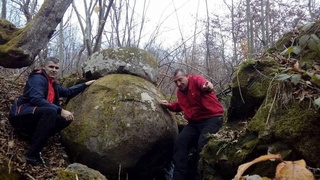
That nature is surprising is shown by the perfectly shaped stone spheres, discovered accidentally underneath the hill Grljevac in Velika Kladuša. For now three have been “discovered” – the largest one seven meters in girth and weighing 2500 kilograms, a smaller one weighing 1200 kilograms with a girth of three and a half meters, and the smallest one girth of 52 centimetres and 600 kilograms. Because of the shape and composition, as well as the unusual space where they were discovered they attract attention also the mystery of whether they’re natural or manmade pique our interest. For discovery of this oddities from Velika Kladuša the members of the Mountaineering Association of Velika Kladuša are responsible.


President of the Association Šefik Sadiković says: “Though the first spheres were located two years ago, no one knew about them nor spoke about them. Only now, when we located these three did we speak publicly about it. Spheres were located in a creek which created a large canyon due to plentiful rain. Locals of Zborište found the spheres and they drove one into the village using a tractor.” That’s how the story about this phenomenon started.

We are sure that there are more of them in this area, the mountaineers made sure that geologists get the spheres. Geologists Ševket Goletić and Senad Karajić determined that “underneath the spheres a “floor” of the same structure as the spheres was found which means that they haven’t been moved since they were created, and that floor gives greater certainty when determining the way they were created.”


From the Jurassic period

“First estimation direct”, Ševket Goletić believes, “that the spheres come from the Jurassic period and that they were created underneath the surface of the sea. That’s why man has nothing to do with the creation of this phenomenon. That period of creation is called Initial Geosynclinal volcanism, which means that they were created around 30 million years ago.”

“It is known that in this region the Panonian sea was present and that it receded seven million years ago, which means that the spheres were created deep underneath the sea due to volcanic action. During eruptions of the volcano rocks in form of lava were expelled in the sea depths, which created additional blasts and chunking, and with the influence of water and sudden cooling this spherical shape was created covered in a manganese veil which gave the spheres additional firmness”, he adds.


According to the first estimations, the content of these rocks is made out of more elements: titan, zircon, vanadium, barium and nickel, which points to the sediment origin from the basic rocks. The surface is smooth and perfectly polished, and it is hard to assume that they could be a work of man which at the time possessed primitive tools. Otherwise, Goletić and Karajić recall, similar spheres were found in other areas as well.

“So”, they say, “they’re numerous in western Mexico, but they’re also located in Bosnia and Herzegovina. Mostly around Zavidovići. And they’re most similar to the ones located in Zavidovići. They’re also located near Stari Majdan in municipality of Sanski Most in the north-western part of BiH.”


Mysterious spheres

Mountaineers say that the spheres were most likely “discovered” earlier, but no one spoke of them. It is assumed that the legends and stories imposed a type of silence. One that, for the people living in these areas – spurred the imagination of the inhabitants about the mysterious spheres.


One of the legends says that the spheres are actually eggs of an ancient dragon and according to folk belief we shouldn’t disturb them. That’s where the answer to the question of why no one spoke about them lies. However, out of curiosity the inhabitants broke them, and determined that the interior is made out of stone. Certain findings say that they were brought home, namely the parts of the sphere. Even built in the foundation of the houses. Later they would be unearthed and placed back to their original location.


In these numerous legends, stories and speculations, there is a theory which claims that they’re meteors which fell a long time ago in this area or that they’re the work of some ancient and unknown civilization. However, mountaineers from Velika Kladuša sought help and analysis of the Mining-geological faculty from Tuzla. While they’re waiting for an answer and debunking of the mystery about the creation of this phenomenon – they went into action.

May 10, 2017

Narodna vjerovanja i običaji iz Velike Kladuše


Svaki kraj i regija ima svoja vjerovanja i običaje koji su najbolji odraz razmišljanja i tradicije tomošnjih ljudi. Svi smo odrasli sa njima i ona nas cio život prate najčešće kao uspomena na djetinjstvo, roditelje ili neke druge pretke. Narodna vjerovanja su bila i svojevrsni obrazac življenja i ponašanja u prošlosti te i zbog toga predstavljaju neprocjenjivu kulturnu baštinu bošnjačkog naroda.


Nafaka i berićet

Ko se rodio četvrtkom tome nikad odjeća ne može dugo ostati nepoderana ili neuprljana.

U mlijeku od pomužene krave nema berićeta ako ga se malo iz posude ne vrati nazad kravi. To se radi tako da se malo mlijeka ulije u ruku i sa njom se uz kravina leđa potare do glave, da ide uz brdo odnosno u napredak.

Na Jurjevo je dobro radi berićeta zaklati kokoš u onoj familiji u kojoj ima ukućan čije ime počinje slovom A.

Da je kuća sretna u novcu treba u blizini kuće saditi neven ili, još bolje, u saksiji, u koju ćete staviti tri metalna novčića, ispod korijena nevena i držati je na prozoru.

Novac nikad ne valja stavljati na golo mjesto ili površinu da ga ne bi uzmanjkalo.

Kad neko slučajno dođe u kuću dok ukućani piju kahvu ili ručaju gostu se kaže da je sa nafakom odnosno da je sretan.

Da nova kuća bude sretna i berićetna treba na onom mjestu gdje se misle ulazna vrata zaklati mladog ovna.

Nekad prije nego bi se povela krava na stočnu pijacu da se proda, domaćica bi je udarila nekoliko puta grabljama ponavljajući: koliko zubaca toliko kupaca".

Da u kući nema nervoze i trzavica treba ugrijati džezvu za kahvu na šporetu, poklopiti je tanjurićem i tako ostaviti tri minute a onda u džezvu staviti mljevene kahve, promješati "da pusti miris" i onda naliti vruće vode. Ta se kahva zove rahatluk kahva.

Sretnim se smatra ako prvo dijete u braku bude žensko dok bude li sin neko od roditelja umrijet će prije vremena tojest sin će mu oduzeti bar minutu života od onog suđenog.

Aug 13, 2015

Soul tied to Halal


Soul is the holder of human destiny. In BiH it is believed that Allah in the first 40 days of inception in the mother's womb determines what the destiny and life of the child i.e. future man, shall be. This is why it is considered that only when the soul enters the embryo it can develop into a fetus and begin its formation.

When a man is terminally ill his family and neighbours come to say goodbye - halale (forgive), in order to ease his death throes. Forgiveness is a very important segment of Islamic tradition, which shows mercy but also ensures an easier passing of the soul from the body. Namely, it is believed that the diseased dies in great pain and agony if someone who he has hurt won't forgive him. His parents, if alive, need to say their indulgences and by that comfort the diseased in his last moments.

How necessary halal is for the tranquillity of the soul is best described by a folk song. Sister in law while dying curses the bride Alibegovic. Time came for the bride to die, but she cannot separate from her soul which is why she asked to be carried to the tomb of her sister in law:


When they were close to the tomb,

From the tomb a small voice came:

Don't bring hither the cursed,

Until she has suffered enough!


They took her to the mountains, the mountains  didn't want to take her, they took her to the water, the water threw her out. They brought her again to the sister in law. As soon as she forgave her, she immediately separated from the soul. How important halal (forgiveness) for the Bosnian people is, is testified by the custom that the person wronged by another says: "I shall die but I will not halaliti (forgive)!"


Bosnian people believe that the one who dies in the eve of Friday or during Eid is freed of all his sins, since then, it is believed, only the noble people die. Harbingers of death are numerous. In Velika Kladuša it is believed that when an old man starts to be dirty, no longer takes care of personal hygiene, or his favourite drink or food o longer tastes good that death is close by. Similarly, people give a lot of meaning to interpretation of dreams since through them one can foretell someone's imminent death. In dreams taking out a tooth and feeling pain, is a sign of death in the house, if the pain is not felt death will take place to other relatives. It is not considered favourable to plough or dig in dreams, and generally overturn earth, or see that the ground has cracked, at some location, since it foretells death in the family. Similar meaning is represented by a sunken foundation of the house or fallen beams from the roof. Such dreams are often disregarded or not shared for fear of them coming true. Usually as a counter measure it is said: "Dream is a lie and god is the truth" or, even, "Hey, let it be, thank Allah!"

Jun 16, 2013

Mujo Hrnjica


                                              Dear God, who was that hero?
                                             It was Mujo Hrnjica of Kladuša.


Even though Mujo Hrnjica is not a mythological character but a real, historical figure, his life is interwoven from beginning to the end with a lot of mystical content which makes him an interesting figure about which one can write a lot.


What Hercules was for the ancient world Mujo Hrnjica is for the Bosnian world. Symbol of courage, a hero of great strength and a dangerous enemy to those that dislike his people. Because of all of those characteristics many Bosnian women named their son's Mujo which was a symbol of great strength and might and it contained prophylactic power against evil and disease.  
  
Historical tradition about Mujo begun in the fall of 1637 when Mujo's uncle Hurem-aga Kozlica brought his two young nephews, who lost their father in the war, from Udbina to Velika Kladuša. The older boy was called Mustafa, but he was called Mujo and the younger one Halil. Besides being younger, Halil was thinner and less bulky during childhood, since his mother couldn't breast feed him because of the great grief she felt for her killed husband, and Halil didn't accept milk from any other woman. That's why they fed him with cow's and goat's milk which brought him the name Stalled Halil or Ugojeni Halil.
 
According to legend, in Velika Kladuša Mujo and Halil were met by a mountain faery (Gorska vila), calling them with a song in early dawn. She brought them to the river Kladušnica, washed them with dew and fed them with faery milk. Halil didn't want to drink milk, he drank the dew instead while Mujo liked the faery milk very much and drank a lot of it. Because Halil took the dew from the faery he grew into a very handsome young man, all the girls in Velika Kladuša yearned for him, calling him and falling into hysteria once they saw him, Unlike him, Mujo gained enormous physical strength which was given to him by the faery milk. He had a stern and piercing gaze, the one possessed by warriors.


In that sense the mountain faery became the second mother to the future heroes who protected Kladuša fort from the enemy. It is interesting to note that the faeries were mentioned as messengers in songs which transferred news from one warrior to the other and helped defeat the enemies or to explain their tricks and ambushes. How popular the faery cult was is best witnessed by the medieval city Vrnograč, 16 km away from Velika Kladuša, which was according to legend built by faeries. That's why it is called faery town.


Vrnograč -  fairy town
 
 
The tradition about Mujo and the faeries is nothing more than an old Illyrian legend since Mujo's physical appearance is that of a warrior; he's tall, has thick dark hair, a moustache and a beard and strong arms. It's no coincidence that faeries are traditionally tied to Mujo since sine in the Illyrian times the cult of warrior was cherished which was closely associated with the cult of deities, especially the main one Vidasus among whom water nymphs were depicted i.e. faeries. In epic poems numerous encounters of Mujo and the faeries is mentioned, where they communicate and where the faeries heal Mujo's wounds gained in battle. How familiar he is with the faery world, their capabilities and character is best depicted in a poem in which Mujo like a skilled wizard manages to outwit the faeries transformed into goats.
 
According to legend, Mujo Hrnjica always carried an amulet with him on the right side of his suit. The amulet wasn't Islamic in content like the famous amulet-shirt of captain Husien Gradaščević, but ancient which stems from the cult of mother earth. It's a small red bag which contained 9 wheat kernels.

Wheat as one of the largest gifts of nature is a symbol of the cult of mother goddess, to whom faeries belong. All of this data confirms that among the Bosnian folk, through long continuity, the ancient tradition and beliefs were preserved. As the legend tells, the enemies found out what was protecting Mujo from death, through venal servants the enemies got a hold of Mujo's amulet. Apparently, the amulet was stolen a day before he was killed.


Mujo Hrnjica is the most famous hero along with Alija Đerzelez of Bosnian epic poems. The epic Mujo Hrnjica was presented to the wider literary and cultural audience in a striking manner by Kosta Hormann in his first and second journal. There the epic character is best presented in his ethical and psychological wholeness. Poems from these journals were recorded throughout Bosnia and Herzegovina and as such present the best proof of how famous and meaningful this grand hero was. Besides Mujo, his brother Halil is often mentioned, while stories about their third brother Omer are few.


On this rock which is called Ploča, which is a folk name for a horse shoe, according to legend the imprint of Mujo's horse Đogat can be seen which was made when they were passing through. The rock is located in Mala Kladuša above the main road between Velika Kladuša and Bihać.


 The city in which Mujo Hrnjica lived with his family - old town in Velika Kladuša. According to the reports of Krsto Frankopan Tržački to the archduke in Graz from 20.11.1641. "Mujo lives in Velika Kladuša with his brothers".


Mujo died between 1633-1676, he was betrayed and murdered by his fake friend Meho Katarica, who had just been converted to Islam.
 
Halil Hrnjica died in Banja Luka during a coupe, during which the famous Tale Ličanin died as well.
 
Omer was ambushed and killed by a chieftain (a leader of outlaws and bandits).     

Dec 22, 2011

Amulet or Hamajlija

 In Bosnia and Herzegovina there is a long tradition of wearing amulets, which are called “hamajlija” (amulet). They are shorter or longer texts from the Quran written on a piece of paper where a picture of a magic square is present (wafq) and at the end of the text the name of the owner is written. Amulets were worn for various reasons such as the protection from sickness and as a cure but mostly because they provide immunity to the wearer.

When someone wants to get an amulet they go to a hodja (mullah) who uses the system of Arabic astrology and numerology, also known as “ebjad hisab”, and turns the name of that person along with the name of his mother into their numerical equivalents and divides it by the number 12. When he receives the final number he then writes the corresponding text.
Every amulet begins with the words: “Bismilahir rahmanir rahim” and continues with some prayer, usually it is the first verse of the Quran, El-Fatiha. The constituent part of any good amulet is the magical square or wafq whose content is made up of a sequence of numbers, Allah’s names or short quotations from the Quran.

In Velika Kladuša an amulet is written for nine days before the appearance of the new moon. When the whole text is completed the paper is folded into a shape of a triangle and sown in a red fabric. Beforehand a leaf of rue (Ruta graveoles) or a piece of  yew (Taxus bacuta) or three beans of coffee are placed inside the amulet. In the past the amulet was encased in metal and sown inside of a rabbits skin.It is interesting to mention that the amulet has a fascinating effect on the wearer. If the wearer is under the influence of black magic, soon after he has started wearing the amulet around his neck a harmful sensation will befall him, for example chest pain, nightmare, etc. That is a positive sign that evil has been neutralized. Also this is the crucial moment when the amulet and the wearer have bonded.

Amulets were mostly worn by children, according to the ethnological data collected during the end of the 19th and the beginning of the 20th century, the majority of Bosniak children wore an amulet sown on the top of their fez, shaped like a triangle and sown inside a red fabric, so that it can protect them from spellbound eyes o which children are most susceptible to. In such an amulet a standard prayer that was written in it was a prayer from the Quran called Ali’Imran, using an ink made out of rose water mixed with musk and saffron.

Amulets were also worn by pregnant women so that they can be protected from spellbound eyes and to prevent a possible loss of the offspring. Besides this a red sting was tied around children’s arms or a small shell was sown on their hats to annul every influence of spellbound eyes. A classical amulet was often worn in a triangular metal box which is called “Mahfaza” whose shape also had a symbolical meaning. Namely, each side of the triangle symbolized a verse from the Quran: “I am God", "There is no God but me”, “No one truly knows what I am.”  In Bosnia and Herzegovina since the old ages amulets connected to war are also known, they are called “En’am”, named after the same prayer in the Quran, these amulets were worn by soldiers going to war.

Besides written amulets in Bosnia we find various objects- amulets; a wolf’s tooth was worn by feeble and scared children, a figurine of a frog made out of silver were worn by women who wanted to be protected against gynecological issues or they wore a silver plate on which it was written “Mashalla”. Out of herbal amulets, garlic, leaf of rue or a piece of yew were used, and from the animal amulets, thorns from a hedgehog, a rabbits foot, a wing from a bat, etc. Besides the need to protect himself from evil, man also wanted to protect his animals.
For protection purposes a red fabric was tied to a tail of a cow, a wooden spoon was used for horses, or a small amulet was written and placed on the horns of the animal. Besides people and animals, material goods were also protected from evil. In the past in Bosnia and Herzegovina a lot of attention was given to the protection of the house from black magic and spellbound eyes, to keep peace and happiness inside the house. Along time ago the practice was to write Allah’s name “Ya Hafiz”, which means “God Protector”, on the house doors, especially in Sarajevo. The name was written in Arabic in golden letters on a dark background.

The amulet doesn’t only have the power to protect a human or a house from black magic, its scope of action is much larger and it can, among other things, protect its owner from negative propaganda and crooks. For that reason an owner would write the following on his house: “I said, and swore to Allah that I will do X.” After that he would take four pieces of paper and write on each one of them, one name of the four great Angels: Azrail, Jibrail, Israfil and Mikail and he would place these papers in four corners of the house.In Bosnia we encounter various beliefs about amulets, and these are the most popular ones;  it is believed that an amulet can lose its protective power if it is punctured by a sowing needle. In the same manner the amulet has no power of protection if its owner drinks or eats a spell in his drink or food, it protects man only from external influences, whether they be material or astral origin.